
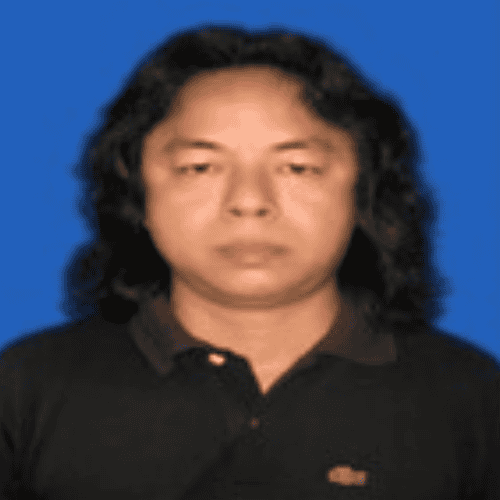
DTP alumnus Lelung Khumi is an Indigenous Peoples’ rights advocate from one of the smallest and most marginalised Indigenous peoples in Bangladesh – the Khumi people of the Chittagong Hill Tracts (CHT).
With a population of only around 3,000, the Khumi have long struggled against discrimination, and state denial of their identity as Indigenous peoples. Growing up in the remote hills of Bandarban, Lelung experienced poverty, hardships and discrimination.
“Most of the villagers in my community were uneducated. People only practiced Jhum farming or shifting cultivation, and there was no tradition of going to school,” he recalls.
At just seven years old, Lelung was sent away from home to attend school far from his village. “It was a very difficult to experience,” he explains “adopting to one culture to a new culture at the age of seven – not that easy.”
Lelung was the first member of his community to graduate from university. He is committed to using his education to advance the rights of his Khumi people – and the rights of Indigenous Peoples in Bangladesh more broadly, gaining wide respect for his work.
Lelung is fluent in six languages – Khumi, Marma, Bengali, English, Tripura, and Bawm – and is recognised for his knowledge of the socio-economic and political situation in the Chittagong Hill Tracts.
To continue his advocacy for the rights of his peoples, Lelung joined Kapaeeng Foundation, the leading Indigenous Peoples organisation in Bangladesh – “Kapaeeng” means rights in the Khumi language. Lelung has also worked with Bandarban Hill District Council on a Joint Venture Programme of the United Nations Development Programme (UNDP), Helen Keller International and TAHZINGDONG, a local NGO in Bandarban.
Lelung was selected as a participant in DTP’s regional Indigenous Peoples’ training program in Baguio City, Philippines. He says that DTP training had sharpened his skills in advocacy and equipped him to represent the concerns of marginalised Indigenous communities more effectively at both national and regional levels.
He recalls the experience was transformative.
“It was wonderful – truly eye-opening for me to get in touch with international mechanisms regarding Indigenous Peoples. The training opened the door for me to understand ILO conventions like 107 and 169, UNDRIP, and other human rights instruments. These are very important in my life – I am still benefiting from them and applying them in my advocacy today.”
The program also expanded his horizons beyond Bangladesh, building solidarity and networks across Asia and the Pacific.
“I’m still in contact with friends from the training – some in Thailand, Chennai, and other places. It helped me a lot in building networks, sharing experiences, and knowing we are not alone in our struggles.”
A respected development professional, Lelung continues his activism and advocacy today. He is now working as Socio-Economic Specialist with TAHZINGDONG, a leading NGO in Bandarban, reflecting his dedication to community development.
He frequently travels to Dhaka – the capital city of the country to attend seminars, workshops, and advocacy events with civil society leaders. He has worked alongside respected Bangladeshi human rights defenders and academics to raise awareness of the rights of Indigenous Peoples in the CHT.
“Besides my professional work, I feel comfortable claiming myself as an activist. I want to continue raising my voice and working with others to ensure rights and recognition for marginalized communities like mine.”