
The Pacific Islands Association of NGOs (PIANGO), NGOs across the Pacific and environmental NGOs and academic experts across the world are raising their concerns about a renewed push for deep sea mining (DSM). The push is being driven by a limited number of corporations promising significant benefits to their shareholders and investors, and to the governments that grant deep sea mining leases.
This webinar is part of the Deep Sea Mining webinar series.
In the recent International Seabed Authority (ISA), concerns by multiple stakeholders have been raised as significant scientific, governance and environmental gaps still stand and that the consensus is that these issues should be resolved before any permits for DSM are granted. However, there are currently two claims being lodged by a Canadian extraction company against the ISA alleging that they had violated their international obligation in reference to due process, transparency and non-discrimination. As it currently stands there is a permission system as set out by UNCLOS which companies wishing to undertake exploration and mining must go through to obtain permission.
This first webinar will present an overview of what Deep Sea Mining is and what happens in the process of Deep Sea Mining. What impacts Deep Sea Mining has on the environment as well as the effects on people specifically the Pacifica community. We will be hearing from academics and members of the Pacifica community on their experiences with the effects of Deep Sea mining.
NOTE: At least half an hour will be allocated for questions and answers, and comments. Through the webinar, and after, useful links will be shared.
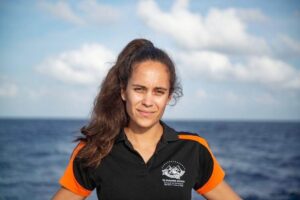 Alanna Matamaru Smith, current director of Te Ipukarea Society (TIS), Environmental NGO based in Rarotonga, Cook Islands. Alanna has an undergraduate degree in Environmental Management and a Masters in Conservation Biology. Through Alanna's line of work at TIS she is kept busy with Seabird Monitoring efforts, Waste Management Awareness and Awareness Raising with local communities on Deep Sea Mining and its potential Environmental Impacts. Alanna has represented TIS at the International Seabed Authority Meetings. TIS position on DSM is that they support a precautionary pause on Commercial Mining until robust independent deep sea ecology research has been conducted to inform decisions
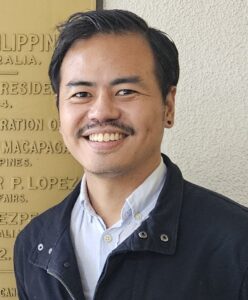 Alex P. Dela Cruz is a Discovery Postdoctoral Fellow at the School of Global and Public Law at the University of New South Wales, where he researches and teaches the Law of the Sea. His current research focuses on the human rights of seafarers and the legal obligations of shipmasters. In 2024, Alex earned a PhD in Law from the University of Melbourne for a thesis that he is converting into a book called International Law and the Philippine Archipelago: State, Sea, and Empire under contract with Cambridge University Press. He has previously held research and teaching appointments in law at the universities of Melbourne and La Trobe in Australia and Tilburg in the Netherlands. Beyond his academic commitments, Alex occasionally represents Australia in bilateral dialogues with the Philippines on maritime security cooperation in the South China Sea. Prior to shifting towards an academic path, Alex worked as a solicitor for the government of the Philippines for several years.
 Lily Vao Roberts is a Tuvaluan-Samoan who lives in Sydney Australia. She holds an undergraduate degree in Journalism and Law and a Masters in Social Policy. She is the President of the Tuvaluan Community Association in NSW and is an Activist for Climate Change, Anti-Slavery and Environmental issues facing Pacific Island nations. She is an Executive Producer for a feature documentary Saving Tuvalu that is filmed in Tuvalu, in the Tuvaluan language. Saving Tuvalu looks at the visionary future that younger Tuvaluans are creating for themselves; a future where strategies including technology that is digitising everything, land reclamation, coral preservation and alternative gardening methods are being used by Tuvaluans to save themselves and their islands.

DTP’s work to promote universal human rights and standards is supported by Australia’s aid program.