
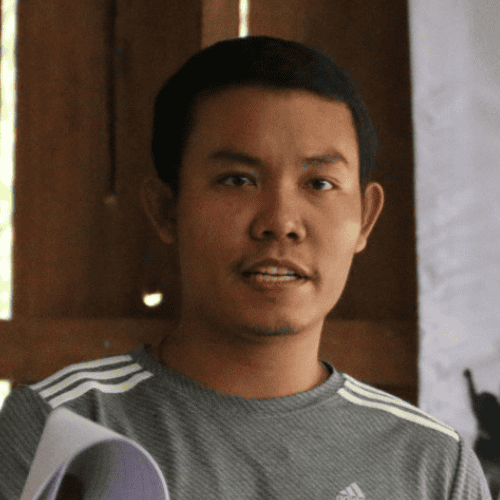
DTP alumni Mory Sar is a Cambodian human rights and development practitioner currently working as a Program Coordinator at Dan Church Aid (DCA). At DCA, Mory manages grants with partner organisations working on land rights, press freedom, digital rights, and local governance issues while monitoring Cambodia’s regulatory environment for civil society organisations.
Mory Sar is an experienced, innovative and proven leader and changemaker. Where he sees gaps in advocacy capacity and human rights knowledge, he acts to address these gaps. For example, seeing the need to invest in building youth leadership and youth participation, he co-founded the Cambodian Youth Network (CYN). He also co-founded Open Cyber Talk, an ICT forum to expand awareness among young netizens and online activists about internet rights, digital security, and freedom of expression.
Reflecting on his experience with the DTP program over 10 years ago, he said,
“The DTP training is a bit high level for grassroot activists and human rights defenders – and better suited to those who already have some knowledge about human rights and human rights frameworks. There was a lot of presentation, a lot of lecture from human rights expert and professors – but at that time not enough participation. It was also difficult to apply the training directly to my own work, although I learned a lot about UN human rights mechanism and frameworks.”
Through the program, he deepened his understanding on UN mechanisms, such as Special Procedures, the Universal Periodic Review (UPR), human rights-based approaches, and how advocates can frame, communicate, and position their work strategically within global human rights forums.
“I gained deeper knowledge and practical skills on how to engage effectively with UN human rights mechanisms, including how to navigate processes, communicate with mandate holders, and use these systems strategically in advocacy.”
He credits DTP with strengthening his ability to see advocacy not only as a local or national endeavour, but as one that can be amplified through informed engagement with international accountability systems.
Human rights work in Cambodia is challenging. When asked about these challenges Mory Sar points out that one of the central challenges of human rights in Cambodia is the gap between law and reality. He said civil society actors frequently face intimidation and interference from local authorities, including efforts to halt community trainings and peaceful assembly. Many human rights and legal trainings at the community and provincial levels are being surveilled, banned or interrupted by the local and provincial authorities. Furthermore, freedom of expression and freedom of the press have been increasingly restricted over the past decade, negatively affecting civic participation.
While the Cambodian Constitution and international treaties formally guarantee fundamental rights, he stresses that human rights violations remain widespread in practice.
“Land rights abuses are one of the clearest examples of the human rights challenges in Cambodia. Powerful political and business actors, often backed by state concessions, continue to dispossess communities with very little accountability. At the same time, many citizens still have only a limited understanding of what human rights actually mean in practice—how they apply in everyday life and what obligations the state has under international law. As a result, human rights often exist more as promises on paper than as protections people can truly rely on.”
Despite these challenges, Mory Sar remains driven by the belief that expanding human rights awareness and education—especially among young people—is one of the most powerful ways to turn rights from legal promises into lived realities in Cambodia.