
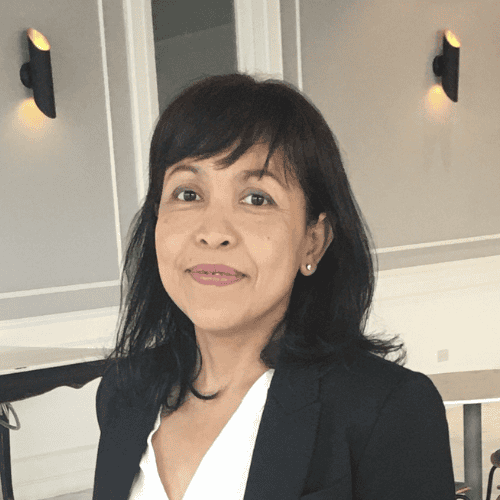
DTP alumna Puangchomphu Suwansirisilp is currently working as the Director of the Social Technology Institute (STI), a Bangkok-based non-profit advancing social innovation, cybersecurity awareness, civic engagement, and digital rights across Thailand and the Mekong region.
“I see my and STI’s role as providers of knowledge that empowers the community,” Puangchomphu said in an interview with DTP from Bangkok. “When young people learn about digital literacy and cybersecurity, they can use that knowledge to access opportunities, understand their rights and protect them.”
Puangchomphu attended DTP’s 2008 regional training program on human rights, business, and advocacy in 2008. That training, she says, gave her knowledge and frameworks she still uses today.
“DTP’s training expanded my knowledge. Prior to joining the training, I was already working in the human rights field but DTP’s training helped me to see more clearly how human rights principles connect with international standards. Overall, I would say that DTP provided me with a stronger foundation for the work I do now.”
In that training she learned about the OECD Guidelines which later enabled her to support partners working on the impacts of mining on human rights and the environment in Thailand. Puangchomphu particularly remembers being struck by a session featuring Filipino migrant workers’ strategic advocacy to reduce high money-transfer fees charged on their hard earned remittances back to their families.
“I realised how human rights work can support people in very practical ways.”
Puangchomphu was born in Narathiwat, in Thailand’s Deep South, and grew up witnessing the growing conflict there, and becoming aware of the challenges facing young people in particular – not only safety, but also of discrimination, access to information, education, and opportunity. This motivated her to focus on practical, non-confrontational solutions that help young people build skills and confidence.
Her commitment to supporting communities and people led her to join the Thai Fund Foundation (TFF), where she worked as Resource Mobilisation Manager for nearly 20 years. One of her initiatives there was the Mekong ICT Camp, a regional training initiative to bring together journalists, technologists, and civil society groups to explore the role of digital tools in strengthening social justice work.
Puangchomphu is one of many Thai DTP alumni stretching back to its first programs in the 1990s. Puangchomphu said that the human rights and digital rights situation in Thailand is highly challenging. Some activists, lawyers and students, are in jail just for social media posts because of repressive laws. Thailand scored 39 out of 100 in US NGO’s Freedom House’s Freedom of the Net indicators and the conclusion that Thailand is not a free country.
Against this backdrop Puangchomphu finds her work assisting and enabling communities and advocates with knowledge and skills meaningful and rewarding. Nearly 20 years since her own experience of DTP, Puangchomphu is investing in building new skills and knowledge of young leaders in Thailand and the Mekong in this critical dimension of human rights. She strongly recommends DTP to young activists and NGO staff:
“Whether they are journalists, activists, or technologists, DTP is very helpful. DTP helps them understand human rights and international mechanisms. It gives rights advocates a strong foundation.”